
The History of the English Organ: From Medieval Times to Modern Era
- Michaell Bay
- Jun 17
- 3 min read

The organ is one of the greatest and most majestic instruments in musical history and the development of the organ in England is the result of centuries of artistic creativity, religious change and technical skill. The English organ has been a key player in the musical and cultural life of England, from the humble pipe organs of medieval monasteries to the large organs found in cathedrals and concert halls today.
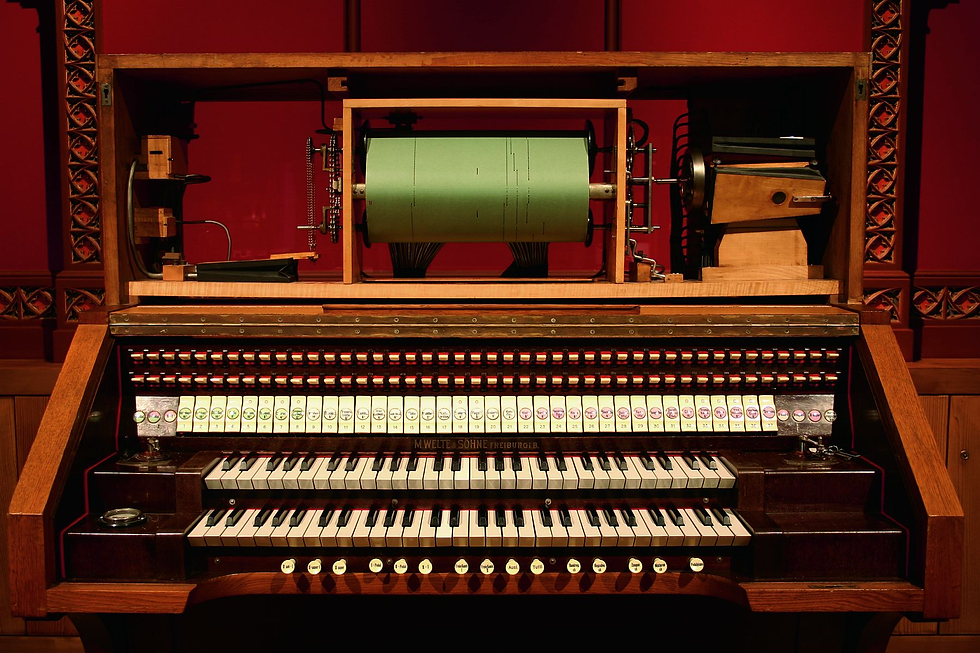
The English organ holds a rich the history of the english organ that can be explored to gain insights into the history of England's sacred traditions, the history of the music itself, and the architectural history of the organ.
This information is an excerpt from The Origins of the Organ in England.
The first organs were introduced to Europe as early as the early medieval period, and slowly began to be part of the English church.
In the 10th and 11th centuries, organs were used in:
Monasteries
Cathedrals
Royal chapels
Religious ceremonies
They were quite different from contemporary organs, but had a strong sound, which was well suited to large, sacred buildings.
The organ began to be linked to:
· Worship and liturgy
· Ceremonial music
· Spiritual grandeur
· Choral accompaniment
Medieval English Organs
English organs were mainly used in churches and monasteries during the medieval period.
The characteristics of the Medieval organs.
The early organs were usually characterized by:
· Large wooden structures
· Limited keyboards
· Basic pipe systems
· Hand-operated bellows
· Loud, sustained tones
Some instruments were very large and needed two or more assistants to work the bellows feeding air into the pipes.
---
Role in Church Music
The music focus of medieval church was Gregorian chant and sacred vocal music.
The organ helped:
Support choirs
Sustain liturgical notes
Introduce ceremonial music
Enhance religious atmosphere
The instrument's majestic sound helped to enhance worship services.
Tudor England and Organ Development
The period of the Tudors was a significant period in English musical history.
With rulers like:
· Henry VIII
· Elizabeth I
The music of the church and the organ grew more complex.
Advances in Tudor Organ Design
Tudor organs introduced:
Improved keyboards
Greater tonal variety
Better pipe construction
Decorative artistic craftsmanship
Thanks to these innovations, music was performed more colorful and expressive.
---
The expansion of Choral Music.The development of Choral Music.
During the Tudor period, there was also a development of complex polyphonic choral music.
The organs were indispensable for:
· Supporting choirs
· Accompanying sacred compositions
· Improving the ritual of kings and godparents
During this time English cathedral music came into great flower.
This course explores the nature and consequences of the English Reformation.
The English Reformation had a profound impact on church music and organ traditions.
Following the religious reforms, the following points were brought about:
· Changes to the worship are being made.
· Declining use of "church music" in some eras
· Damage or loss of some organs
· Debates on sacred music in the political sphere
During religious wars certain organs were damaged or destroyed, particularly in the 17th century when they were subjected to the influence of the Puritans.
Nevertheless, organ music soon re-emerged in English churches.
It is hoped that this will be the beginning of the restoration and revival of organ music in the United Church.
This was followed by a revival of church music after 1660 with the restoration of the monarchy.
Numerous cathedrals and churches were rebuilt or replaced with organs destroyed during previous wars.
This period encouraged:
· New organ construction
· Improved craftsmanship
· Broader musical traditions of performance.
English worship again returned to organ music.
---
It has an influence in Baroque music.
The Baroque period saw more complex compositions and ways of performing.
Composers and organists explored:
· Rich harmonies
· Contrapuntal music
· Advanced keyboard technique
· Larger musical structures
It was an important era in the history of English organ music.


Comments